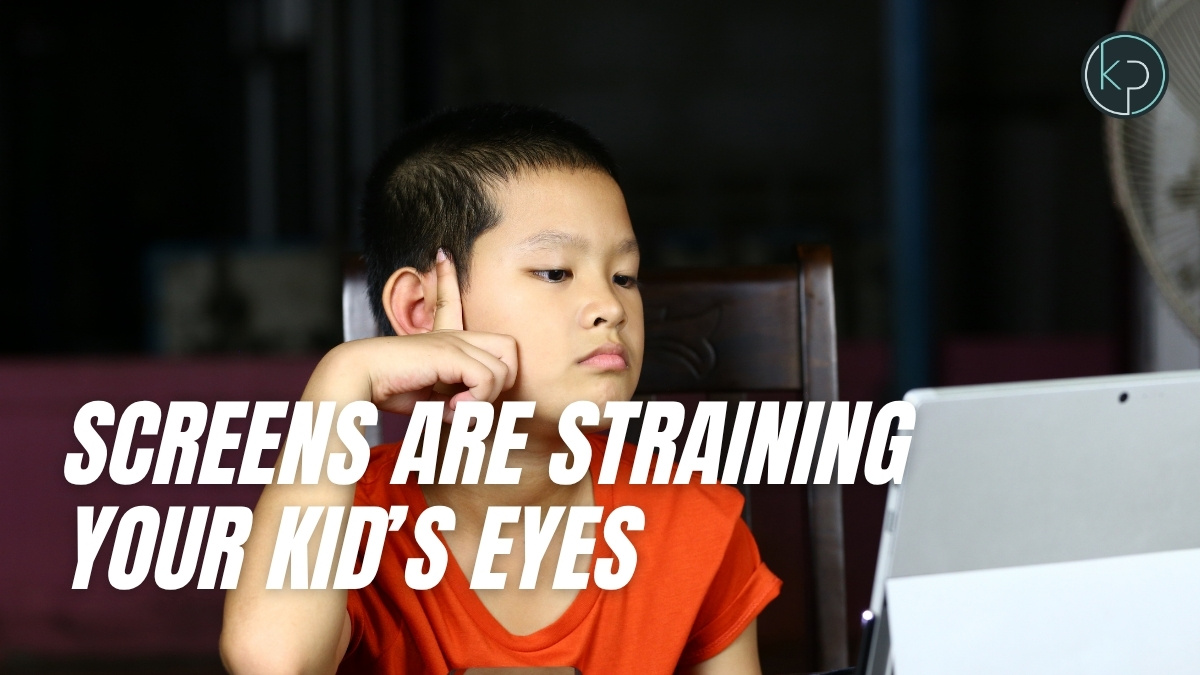
Yes, and the research behind it is bigger than most people realize. A pooled analysis in the British Journal of Ophthalmology, drawing on more than 5 million children across 50 countries, found that roughly one in three children and teens worldwide now has myopia, or nearsightedness, and researchers point directly at more time spent doing close-up work, phones, tablets, TV, video games, as a primary driver. Total cases are projected to top 740 million by 2050.
What the British Journal of Ophthalmology Study Actually Found
This wasn't a small survey. Researchers pulled together data on over 5 million children and teens across every inhabited continent to get a real global picture of myopia rates, and the pattern they found was consistent enough to take seriously. Kids who spend more time doing near-range activities, meaning anything held close to the face, are developing nearsightedness at higher rates, and it's showing up earlier in childhood than it used to. Myopia doesn't stay put once it starts, either. It tends to worsen as a child ages, which is part of why researchers are flagging this now rather than waiting to see if it levels off on its own.
Why Japan and South Korea Have the Highest Rates in the World
The country-level numbers are the part that actually makes this concrete. Myopia rates run around 86% in Japan and 74% in South Korea, both far above the global one-in-three average. That's not a coincidence of genetics. It lines up closely with how early kids start formal schooling in those countries and how much close-focus work that schooling demands from a young age. Kids across parts of Asia can start structured schooling as young as age 2, which means young eyes are doing sustained close-range focusing years before that happens in most other parts of the world.
Why African Children Have Myopia Rates Seven Times Lower
This is the detail I find most convincing, because it's a natural comparison the data already contains. In much of Africa, children typically start school between ages 6 and 8, several years later than in parts of Asia, and myopia in African children shows up at roughly seven times the lower rate seen elsewhere. Genetics plays some role in who develops myopia, researchers are clear about that, but a gap this consistent, tied this closely to when close-up visual strain starts and how much of it accumulates, points hard at environment and habit rather than ancestry.
How the COVID Lockdowns Made an Existing Trend Sharply Worse
The pandemic didn't create this problem, but it poured fuel on it. When kids were stuck indoors for extended stretches, near-range screen use went up and outdoor time went way down, and researchers are directly connecting that stretch to accelerated myopia progression in the data. The US Centers for Disease Control and Prevention's response has been straightforward: limit kids' screen time and get them outdoors more, not as a vague wellness suggestion but as an actual response to a measurable eye-strain problem.
Why I Think Parents Underrate This Compared to Other Screen Time Risks
Most of the screen time conversation among parents I know centers on content, what apps, what videos, what algorithm is grabbing a kid's attention. This is a completely different kind of risk, and it's a physical one that doesn't care what's on the screen. A toddler doing an educational app for two hours is doing the same close-range eye strain as a toddler watching cartoons for two hours. The device and the content are almost beside the point here. The distance from the eyeball to the screen, and how many hours a day that distance stays locked in, is the actual variable driving this.
I also think the outdoor time piece gets undersold. It's not just that outdoor play means less time on a screen. Natural light and being able to focus on things at real distance, a tree across a field, kids playing on the other side of a yard, appears to actually protect developing eyes in a way that indoor time, screen or no screen, doesn't replicate. That's worth knowing, because "limit screen time" alone misses half of what actually helps.
What to Actually Change About Your Kid's Day This Week
Pick one weekday this week and build in a solid hour of genuinely outdoor time, not indoor play, actual outside, ideally in daylight, and don't stack it after a long screen session, put it in the middle of the day where it breaks up close-range focus time. If your child is already showing signs of squinting at a distance, missing things on the whiteboard at school, sitting closer to the TV than they used to, that's not a habit to wait out. Get an actual eye exam. Myopia caught early is far easier to slow down than myopia caught late.