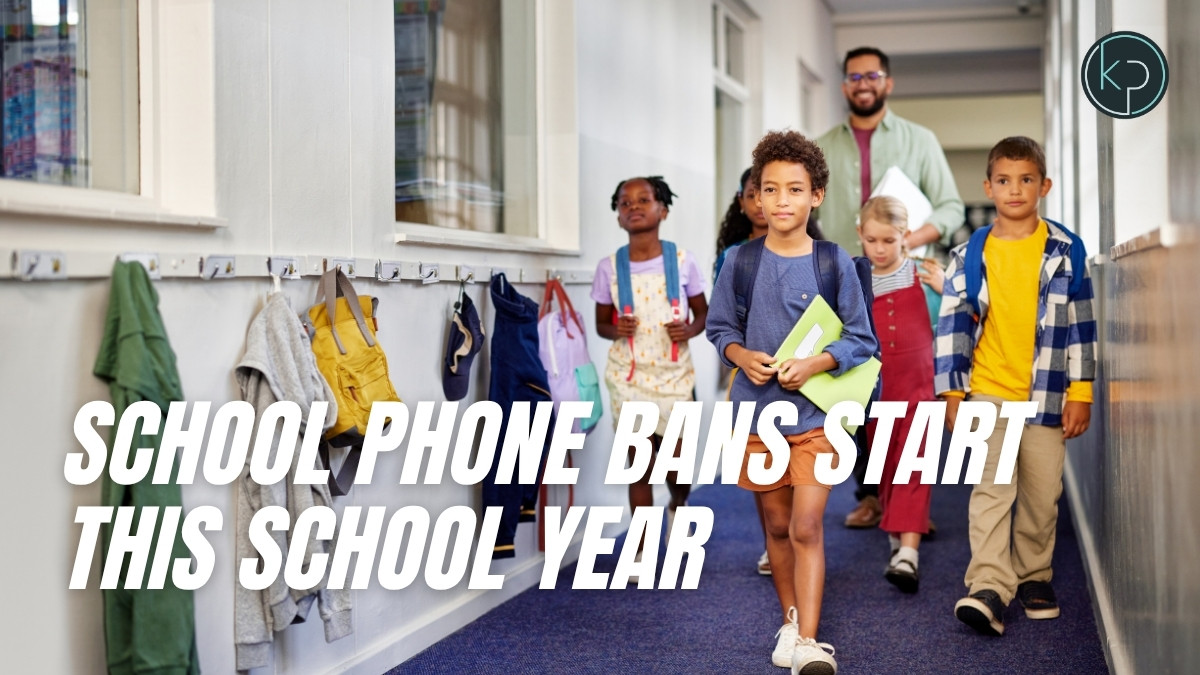
If your kid is heading back to a public school this month, there's a good chance their phone is about to get locked away before the first bell rings. More than 35 states have signed some form of school cell phone restriction into law over the past year, and a wave of strict "bell-to-bell" policies start with the 2026–2027 school year specifically. If nobody's told you the actual plan yet, this is the week to ask the school directly — not assume it works the way it did last spring.
Illinois, Michigan, and Indiana: What Each New Law Actually Requires
Illinois Governor JB Pritzker signed Senate Bill 2427 into law in July 2026, requiring every public school district to adopt a bell-to-bell policy restricting phone access from the first arrival bell to final dismissal for kindergarten through eighth grade; high schools get to choose whether the restriction covers the full day or just instructional periods. Michigan's House Bill 4141, signed in February, requires school boards to prohibit phone use during instructional time starting this fall. Indiana's law already took effect on July 1 and bans student phone access for the entire school day, no exceptions built in for passing periods. Three different states, three slightly different rules, and if you've got kids in more than one district, don't assume the policy is the same across town. California has its own version working through a similar timeline, requiring schools to adopt a policy limiting or banning phone use, and plenty of other states are somewhere in between a full statewide mandate and leaving it up to individual districts to decide.
Why So Many States Passed This in the Same Year
This isn't one state copying another in isolation — it's a genuinely fast-moving trend. As of the end of 2025, 35 states and Washington, D.C. had signed or enacted some form of cell phone policy for K-12 classrooms, and several of the biggest ones landed within months of each other in 2026. The driving argument from lawmakers has been classroom focus and reducing social-media-linked distraction during the school day, not any single incident. Whatever you think of the reasoning, the practical effect for your family is the same: the phone your kid used to text you from between classes may no longer be reachable during the day at all.
The Part These Laws Don't Solve: How Your Kid Reaches You
Most of these bans work through a pouch system, like Yondr, that locks the phone at drop-off and releases it at dismissal, or a simple locker rule enforced by staff. Either way, a phone your kid can't touch during the day is also a phone that can't tell you about a schedule change, a forgotten ride, or an actual emergency. Schools are supposed to have a front-office procedure for real emergencies, but "supposed to" and "clearly communicated to every parent" are not the same thing, and a lot of districts are still finalizing the details for this specific school year as I'm writing this. Some schools are sending updated handbooks home in the first week, others are leaving it to a single line in a back-to-school email that's easy to miss between supply lists and bus schedules.
My Take: The Ban Is Fine, the Smartwatch Rush Is the Risk
I don't have a problem with the bans themselves — a locked-away phone during class time is a reasonable trade for a kid's attention, and the research on classroom distraction backs it up. What worries me is the predictable next move: parents buying a cheap kids' GPS smartwatch as a workaround without checking what's actually inside it. A Norwegian Consumer Council review of kids' tracking smartwatches this year found real security problems in three out of four brands tested, including flaws that let an outside attacker pull a child's live location. If you're going to hand your kid a location-tracking wearable as the new way to stay in touch, spend ten minutes checking whether that specific model has a security track record before you buy it, not after. A device that leaks your kid's real-time location to a stranger is a worse outcome than the one the phone ban was trying to fix in the first place.
Confirm Your School's Actual Emergency-Contact Procedure This Week
Call or email your kid's school this week and ask two specific questions: what is the exact policy for your grade level starting this year, and what is the actual procedure if you need to reach your kid — or they need to reach you — during a real emergency. Don't rely on a memory of last year's rules or a rumor from the class group chat. If you're considering a smartwatch as the new communication line, look up that specific model's security history before it ends up on your kid's wrist.