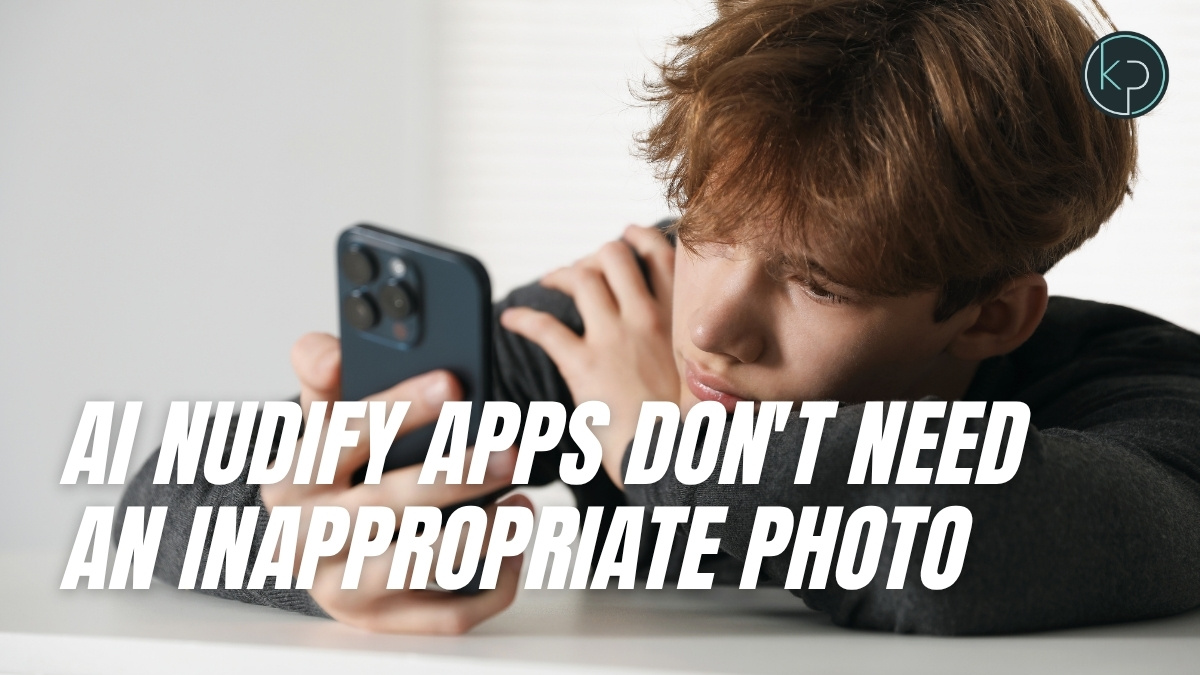
An AI "nudify" app can turn any ordinary photo of your kid, a school picture, a sports team photo, a normal social media post, into a fake sexualized image, and your child never has to take or share anything inappropriate for it to happen. About 16% of US teens ages 13 to 17 say they personally know someone who's been targeted this way, and 11% say they've found out deepfake nudes of themselves from when they were minors were being shared or reshared. This is already happening in real schools, not a hypothetical future risk.
How Nudify Apps Turn an Ordinary Photo Into a Weapon
Nudify apps use AI to digitally strip clothing from a photo or paste a person's face onto an explicit image, producing something that looks real enough to humiliate, threaten, or bully with. The part parents need to sit with is that the source photo doesn't need to be revealing at all. A normal profile picture, a family post, a picture from a school event is enough raw material. Some of these are dedicated "undress" apps, others are general image editors and face-swap tools that get misused the same way. Either way, the barrier to entry is low enough that kids in a classroom or a friend group can and do use these tools on each other. An independent media organization has already tracked 23 separate cases of deepfake abuse targeting school communities in the US since 2023.
Why Apple and Google's App Store Bans Aren't Actually Working
Both Apple and Google technically prohibit nudify apps in their app stores. That policy exists on paper. In practice, investigations from watchdog groups have found these apps remain easy to find and download anyway, and separate reporting has shown Meta hasn't fully blocked ads promoting nudify apps on Facebook and Instagram despite its own ban. If you're assuming the app stores are quietly filtering this out for you, they aren't doing it reliably. That gap between stated policy and what's actually reachable on your kid's phone is the real problem right now, more than any single app or company.
What Minnesota's New Nudify App Ban Actually Does
Minnesota became the first state to pass a law specifically banning websites and apps that promote digital undressing, making it the first real legal attempt to go after the tools themselves rather than just the people who misuse them. It's a meaningful first step, but it's one state, and a federal civil right of action for people targeted by nonconsensual deepfakes has stalled in Congress. If you live outside Minnesota, don't assume there's a comparable law protecting your family yet. There probably isn't.
Why This Scares Me More Than the Old "Stranger Danger" Version of Online Safety
The online safety conversation most parents grew up hearing was about strangers, someone outside the family reaching in. This is different and, honestly, worse in a specific way. The 23 school-community cases aren't strangers. They're classmates. A kid doesn't need to be tricked by a predator online to become a victim here, and a kid doesn't need bad intentions to become the one doing the harm, either, just access to a free app and a photo pulled off a classmate's public profile. That changes who you're actually watching for. It's not just about who your child talks to online. It's about who has access to a photo of your child and what tool they've got on their phone.
What to Do This Week If You Think Your Kid Could Be a Target
Have a direct conversation with your kid about what a nudify app is and that this is happening at schools, not just in the news. Tell them plainly that if they ever see or hear about a manipulated image of themselves or a classmate, they should tell you or another trusted adult immediately rather than trying to handle it quietly, because the instinct to hide it out of shame is exactly what lets it spread further. If it's already happened, don't share or forward the image under any circumstances, even to document it. Save what you can as evidence and report it to the platform it appeared on, the school if other students were involved, and law enforcement.