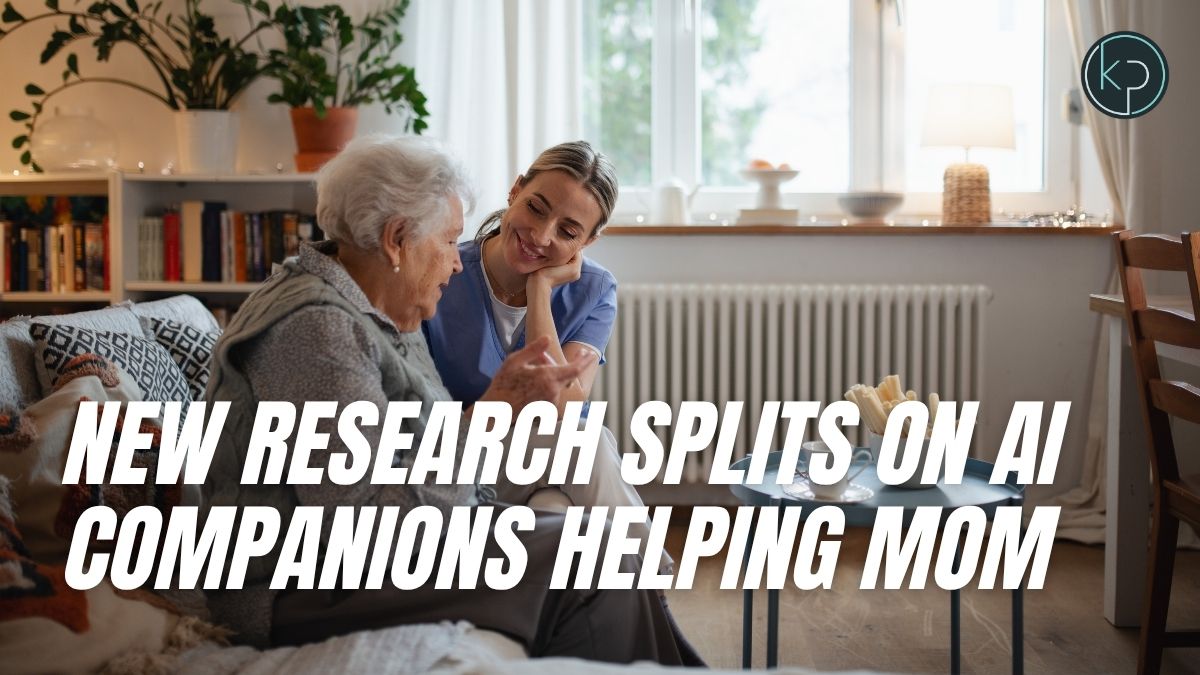
It depends heavily on who your parent is, not just what the product is. State-funded pilots of AI companion devices like ElliQ have shown genuinely strong results, with participants in New York's program reporting reduced loneliness at rates in the 94 to 97% range. But a study published just this week in Nature Human Behaviour found the opposite effect can happen too: intense use of AI companions was linked to worse well-being specifically among people with smaller offline social networks, the exact population these tools are often marketed to.
What ElliQ's State-Funded Pilots Actually Show
ElliQ is a tabletop AI companion device built by Intuition Robotics and distributed through state aging offices in partnership with local governments. New York's Office for the Aging piloted it with hundreds of older adults living alone, and the reported numbers are striking, the vast majority of participants said it reduced their loneliness and improved their well-being, with users averaging more than 30 interactions a day. It's since expanded to 15 government agencies nationwide. This isn't a startup's marketing claim, it's data from an actual state program tracking real users over time, and it's worth taking seriously as evidence that this category can genuinely help.
What the New Nature Human Behaviour Study Found About Vulnerable Users
Here's the complication. Researchers looked at over 1,100 AI companion users and found that heavy use correlated with poorer well-being specifically among people who already had smaller offline social networks, when companionship with the AI was their primary reason for using it. The study also found something I think matters even more for older adults specifically: sharing sensitive personal information with a chatbot correlated with lower well-being, which is the opposite of what happens when people confide in an actual human. Opening up to a person tends to help. Opening up to a chatbot, at least in this data, tended not to.
Why the Same Technology Helps Some People and Hurts Others
Put these two findings next to each other and a pattern emerges that actually makes sense once you see it. ElliQ's biggest wins came through structured, proactive features, medication reminders, exercise prompts, scheduled check-ins, things that support a person's actual daily life and keep them engaged with the world around them. The concerning pattern in the newer study shows up specifically when the AI becomes a substitute for human connection rather than a supplement to it, especially for someone who's already isolated and using the chatbot as their main emotional outlet instead of one piece of a fuller life.
Why I Wouldn't Treat This as a Replacement for a Phone Call
My honest read is that this category is real and worth considering for an isolated parent, but only if you go in treating it as one tool alongside actual human contact, not instead of it. A device that reminds your mom to take her medication, prompts her to call you, and gives her something to do between visits is doing something genuinely useful. A device that becomes the primary relationship in her day because nobody's calling her otherwise is solving the wrong problem, and the research suggests it might make things worse rather than better in exactly that scenario. If you're considering one of these for a parent, the honest question to ask first isn't "will this help with loneliness." It's "am I about to let this replace the calls I should be making instead."
What to Ask Before You Set One Up for a Parent This Week
Before buying or activating an AI companion device for an aging parent, have an actual conversation with them about how often you and other family members will realistically be calling or visiting, and be honest with yourself about whether that number is enough. If it isn't, fix that first. The device works best as backup for a life that already has real people in it, not as a stand-in for one that doesn't.