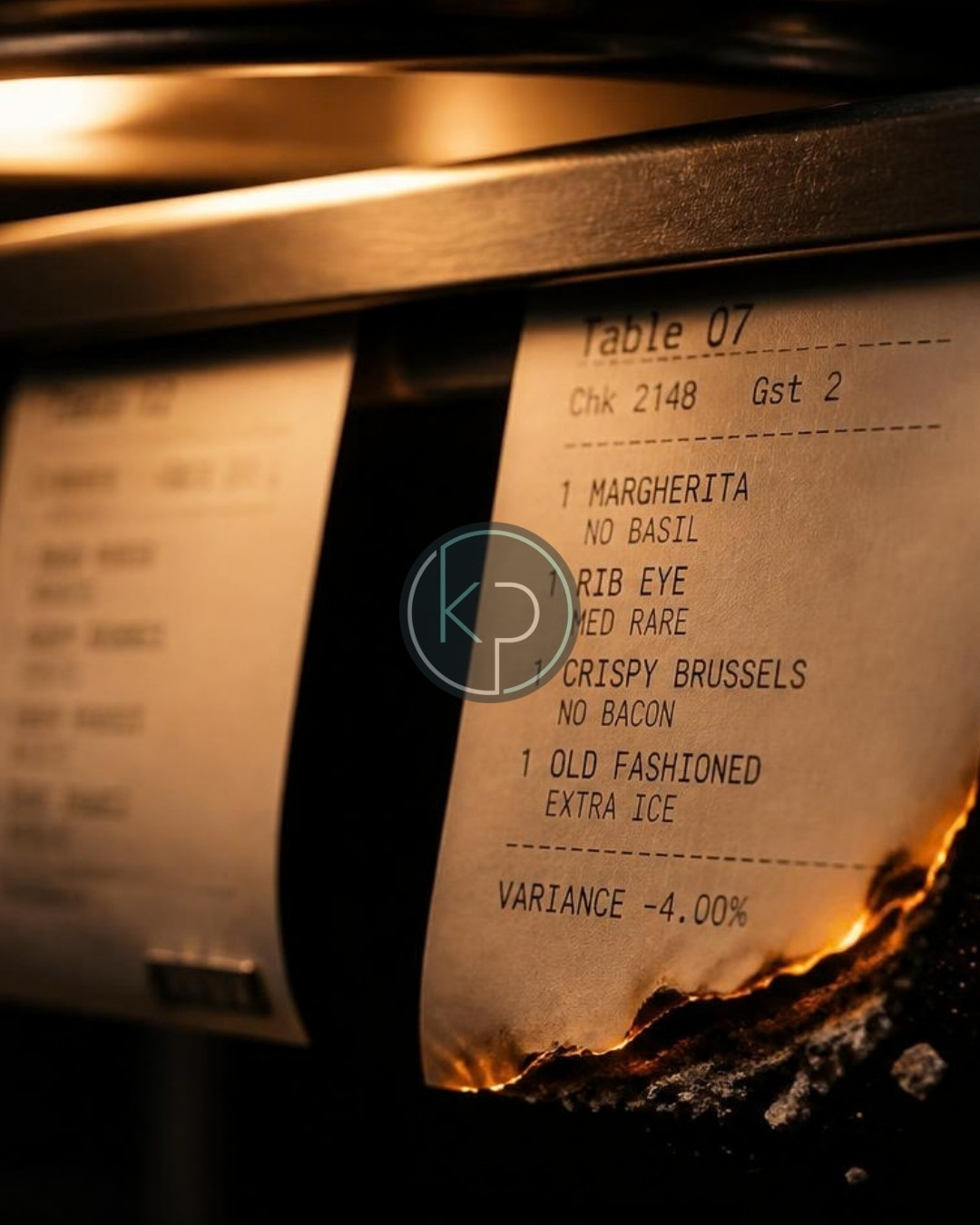
When your restaurant POS goes down on a Saturday night, the problem quickly spreads beyond the payment terminal. Orders, kitchen communication, payments, reporting, and staff coordination can all break down at once. Offline mode may keep some of the operation running, but it does not guarantee normal service. What happens next depends on how well the restaurant prepared before the outage.
I've always thought this is one of the most overlooked parts of restaurant technology. Everyone wants to talk about what a POS system can do when everything works. Far fewer people talk about what happens when it doesn't, especially when the dining room is full, the kitchen is buried, and guests are waiting to pay.
A restaurant POS outage can take down more than payment processing
The first instinct is usually to blame the POS provider. Sometimes that's justified. But a POS outage doesn't necessarily mean the POS company's servers are down.
The problem could be the internet service provider, a failed router, a damaged network cable, a wireless access point, or an individual device that has lost its connection. The restaurant may have perfectly functional POS equipment and still be unable to operate normally because one connection has failed.
That distinction matters. If the internet connection is gone, calling the POS provider may not solve anything. If the local network is down, switching to a backup internet connection may not help either. The manager needs to know which part of the system failed before choosing a response.
Unfortunately, this is often discovered in the middle of service rather than during a planned test.
POS offline mode does not mean the restaurant can operate normally
Offline mode is useful, but the name can create expectations that the actual system cannot meet.
Depending on the platform and configuration, restaurants may still be able to enter orders, print kitchen tickets, and accept certain card payments. But other functions can disappear. Gift cards, loyalty rewards, online ordering, customer accounts, reporting, and some payment methods may become unavailable.
Toast's offline documentation explains that devices cannot sync orders with each other while disconnected. An order entered on one terminal may not appear on another. Some payment types and other features are also unavailable.
That creates an operational problem, not just a technical inconvenience. The server at one terminal may have information that the bartender or another server cannot see. The kitchen may receive tickets through a backup printer while other orders never arrive through their normal routing. A manager may be unable to see an accurate picture of sales until the system reconnects.
Offline mode is a reduced operating condition. It should be treated that way.
Offline card payments can still be declined after the guest leaves
This is the part I would want every general manager to understand before the first outage happens.
When a POS accepts an offline card payment, it may be storing transaction information locally for processing later. That does not necessarily mean the card issuer approved the transaction at the time of sale.
Once connectivity returns, those transactions are submitted for authorization. A payment can still be declined or disputed. The restaurant may have already served the food, closed the check, and sent the guest on their way.
Square's offline payment policy makes the risk explicit. The business is responsible for expired, declined, or disputed offline payments. Supported hardware also has specific upload deadlines. Square recommends reconnecting and uploading transactions within 24 hours, even where a longer window is permitted.
Toast also warns that offline payments are not fully authorized until the device reconnects. Its documentation recommends retaining merchant copies of receipts and tracking pending transactions.
That means a manager needs to understand the payment exposure before deciding how much offline business to accept. Transaction limits, supported payment types, device compatibility, and the process for retaining receipts all matter.
There is a difference between keeping the line moving and assuming every payment is guaranteed. The first is operational judgment. The second is a financial risk.
One internet connection leaves the entire restaurant exposed
A restaurant can spend thousands of dollars on POS equipment and still depend on one internet connection.
If that connection fails, everything that depends on it may be affected. A second POS terminal connected to the same router is not a backup internet connection. Neither is a second wireless access point connected to the same failed network.
A separate LTE or 5G failover connection gives the restaurant another path to the internet. With a properly configured dual-WAN router, the backup connection can take over automatically when the primary provider becomes unavailable.
But buying a cellular router is not enough. The backup needs to be connected to the right network equipment, configured to fail over, and tested with the actual POS system. The restaurant should also confirm that payment terminals, kitchen displays, printers, and other critical devices behave properly after the connection changes.
There is another important distinction. Cellular failover can help when the restaurant's internet provider is the problem. It cannot fix a POS provider outage, a failed local router, or a power failure that takes the network equipment offline. Different failures require different responses.
This is why I would treat backup connectivity as part of the restaurant's operating infrastructure, not an optional technology upgrade.
A POS recovery runbook is useless if nobody knows where it is
I've seen enough operational planning to know that a procedure nobody can find is not much of a procedure.
A manager should not have to search old emails, call three people, or guess which cables to unplug while a Saturday dinner rush is falling apart.
There should be a short, accessible runbook that explains what to check, who to contact, what staff should do, and which actions must be avoided.
That last part is important. Toast specifically warns against restarting routers, unplugging network cables, turning off devices, logging out of the POS application, or uninstalling the application while offline. Those actions can make recovery harder or cause stored order and payment information to be lost.
The runbook should identify the primary internet connection, backup connection, router, POS support contact, internet provider contact, and the person authorized to make technical changes. It should also explain how to handle orders, payments, kitchen tickets, guest communication, and manual records while normal service is unavailable.
Every manager on duty should know where that document is and how to use it. If only the owner or one IT contractor knows the recovery process, the restaurant has an operational dependency that should not exist.
Test POS offline mode and LTE failover before the dinner rush
Reading the vendor's offline documentation is a start. It is not a substitute for testing the actual restaurant configuration.
I would want a controlled test that answers some basic questions. Can staff enter orders when the primary internet connection is disconnected? Do kitchen printers still receive tickets? Can the restaurant accept the payment types it expects to accept? Does the backup internet connection take over automatically? Do all terminals reconnect properly? Can managers identify transactions that are still pending?
The test should also cover the human side. Can a new manager follow the runbook without calling the IT person? Do servers know how to communicate orders to the kitchen if the normal workflow fails? Is there a reliable way to track checks, payments, tips, and outstanding balances until the system recovers?
After the test, document what failed and correct it. Repeat the test when equipment, providers, network configurations, or POS software changes. A backup connection that has never been tested is an assumption, not a continuity plan.
Restaurant resilience is measured by what still works during an outage
A restaurant does not need to eliminate every technology failure. That's unrealistic. It does need to know how much of the operation can continue when one happens.
That means looking beyond the POS purchase and examining the entire chain: internet service, local networking, cellular backup, payment processing, kitchen communication, staff procedures, and recovery.
The real question isn't whether the POS vendor advertises offline mode. It's whether your restaurant can take orders, communicate with the kitchen, handle payments responsibly, keep accurate records, and recover without creating a second problem.
Because when the system goes down on a Saturday night, nobody in the dining room cares what the sales presentation promised. They care whether they can order dinner, whether the kitchen receives it, and whether they can pay their bill.
And the general manager needs an answer that doesn't depend on finding the one person who knows how everything works.